

Balustrades are sadly, often at the base of a façade practitioners to-do list. The sad bit is because I started life off designing, manufacturing and installing them, even if I wasn’t perfect at the craft. There’s possibly a building somewhere in Chelsea with a very small section of balustrade at the end of a kite winder where the handrail is 100mm too short because I measured on the hundred and forgot to transfer to the bench.
These are not quite on-site but on the way to or nearby.
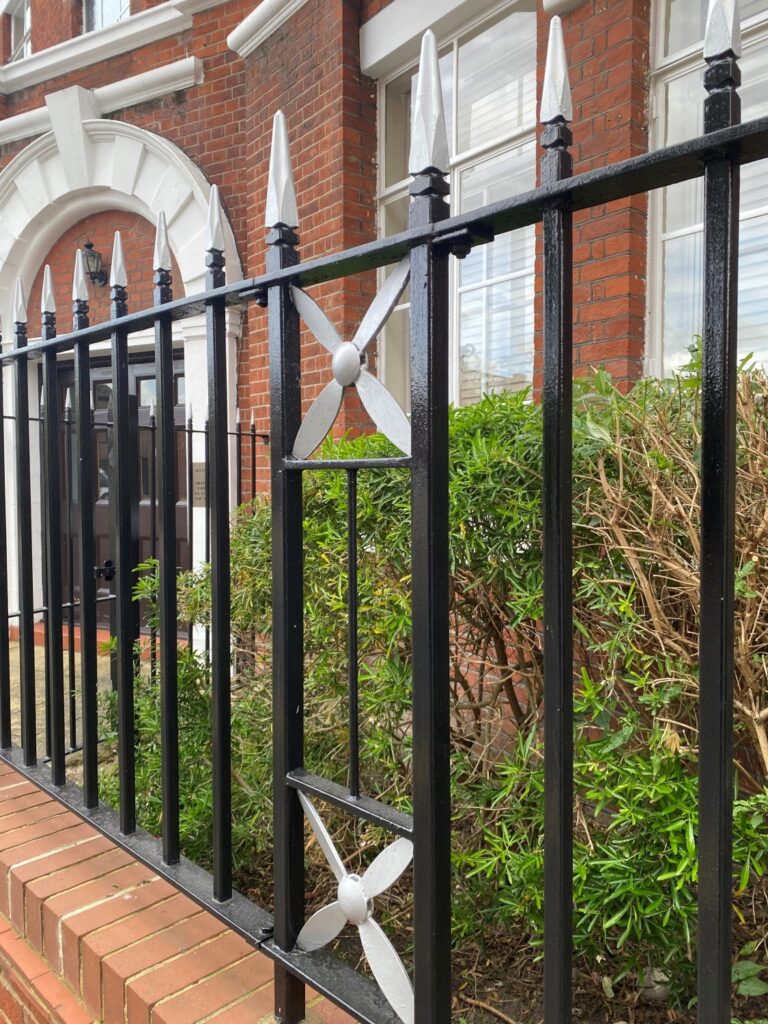
The cover image is on the way to a meeting back in Aug 2022, They’re sand cast iron railings that have been roughly fullered and painted many times. These are Grade II listed as they’re one of the remaining stretches that were not collected during the war for scrap metal. I pass them a few times a year and still think they look better than some modern era mutations. They were installed from around 1812 onwards, the Titanic sank a century later though made from higher tensile steel.
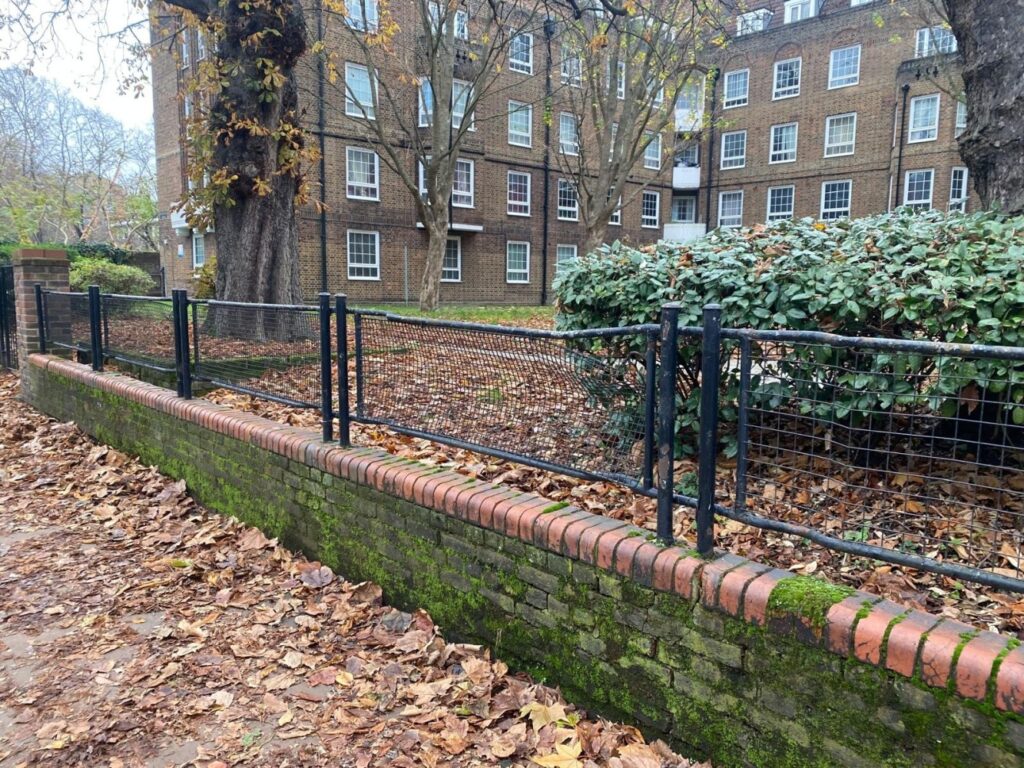
These are balustrades in Camberwell, the image was captured in deep autumn with the deceased leaf fall on the pavement. These are Stretcher Railings which can be found around several London boroughs. They are a function of metal shortages during the war where railings were stripped and collected for melting down into armaments. ‘Any Old Iron’ was a common call during collection time. After the war one of the surplus devices Britain had were wire stretchers, these were converted to balustrades, see the bends where hands were to lift the casualty at each end and to keep off the ground.