A Colonial Corner with Rare Waterproofing and Some Sadness

A Colonial Corner with Rare Waterproofing and Some Sadness

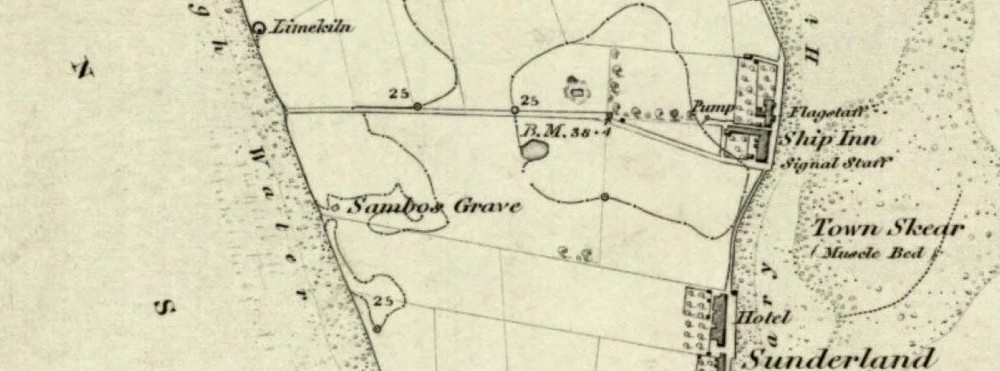
Lancashire, Sunderland Point is essentially the setting of any Dickens novel that needs constant claustrophobically low grey skies, run aground boats and salt marshes; it is romantically grim. What makes this region plunge further into darkness is that it harbours Sambo’s Grave, I’ll come back to this.

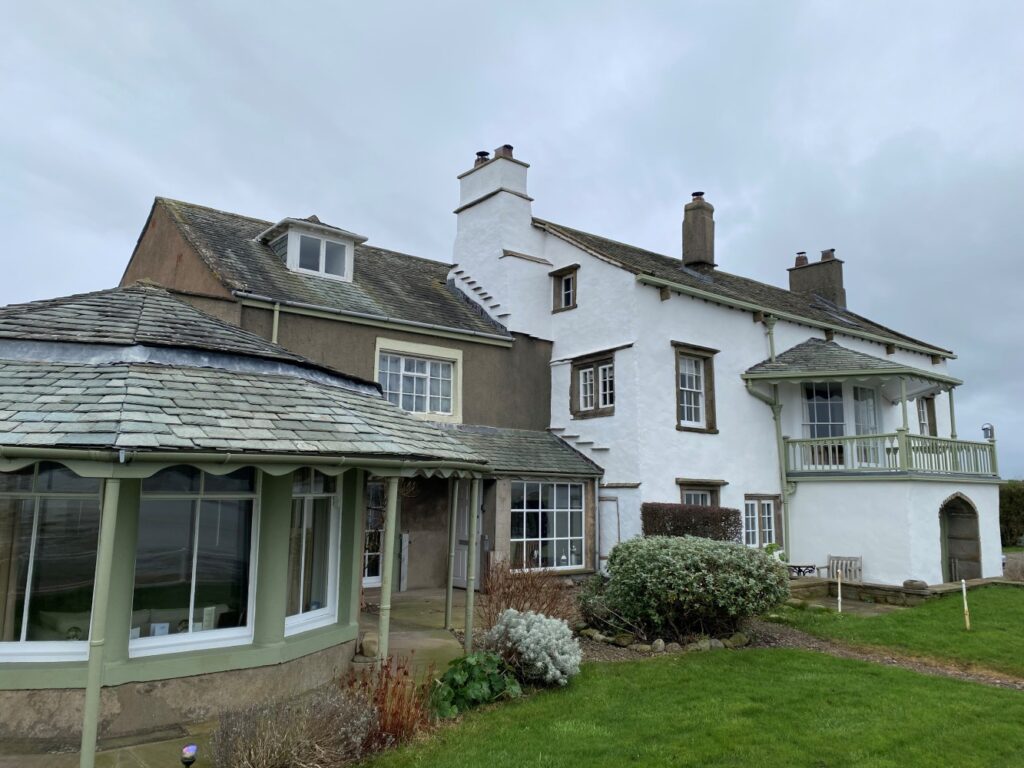
The one building that is misplaced from the Dickensian landscape at Sunderland Point is the Jamaican esq themed house, Old Hall, 1683.

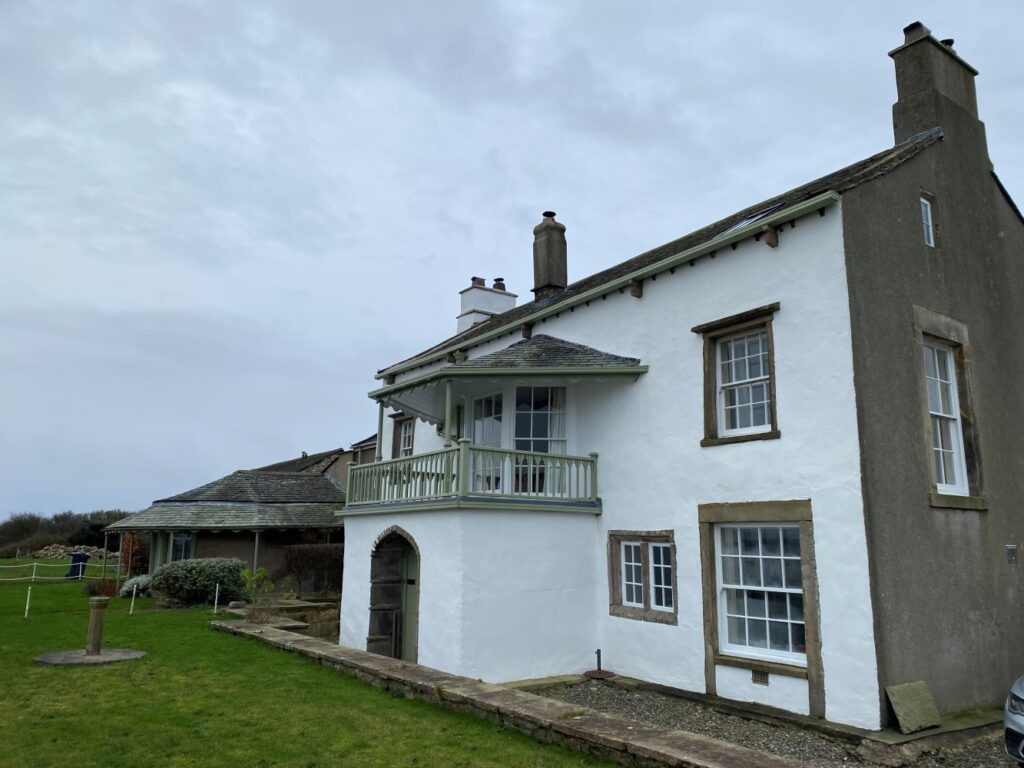
Built for Robert and Elizabeth Pearson, its origins are borne of the occupant’s partialness to the architecture they had observed from afar, in this case the West Indies. It’s almost a living photograph today, and likely the reason for its construction; a desire to recall and remember something pleasing.

Whilst Old Hall has colonial style verandas, awnings and embellished fascia trims, the building stoically grips British construction of the era, that being masonry and protected by lime render. The treat that I rarely get to see is the early waterproofing from perpendicular planes or abutments. Liquid or polymer-based membranes would not emerge for another 3 centuries (discounting traditional asphalt with long lengths of expensive lead).

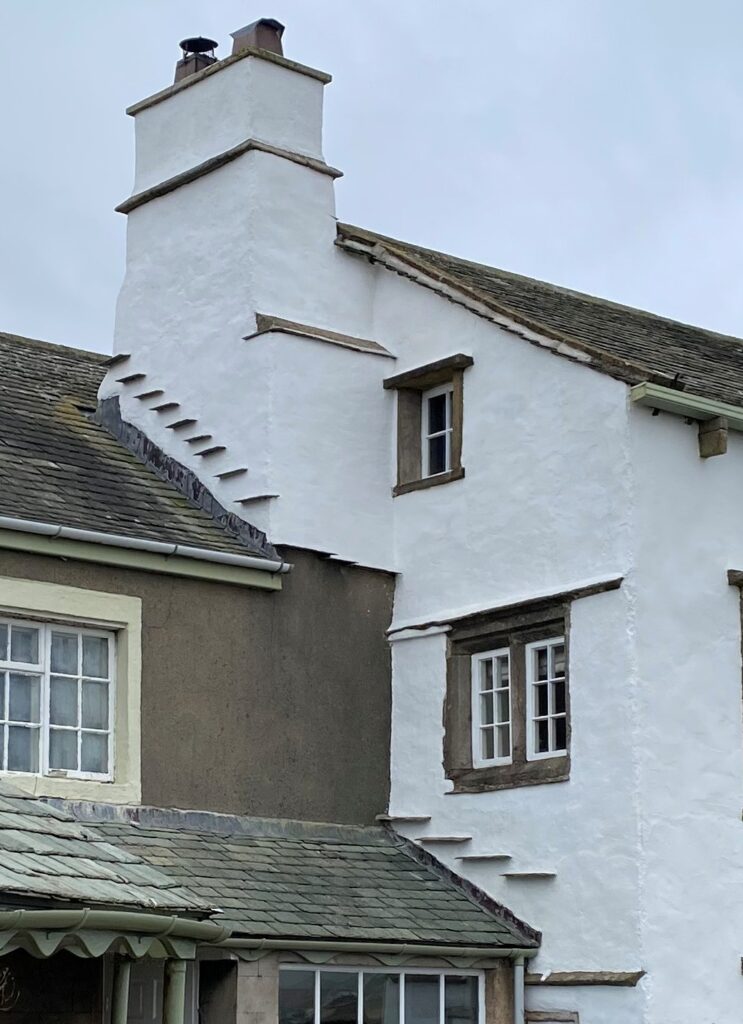
See the miniature looking steps projecting from the vertical wall that roughly align with the pitch of the roofs, these are ‘Crow Steps’. They are slate projections used to disperse water from vertical surfaces away from adjoining horizontal structure.

I think each roof pitch may have been altered over time, the upper being a little too high and the lower slightly oblique, but not the focus. This detail serves to protect façade interfacing with horizontal deflection surfaces. It’s really useful, as it’s telling us about the likely construction before having to do intrusive works. The gable/abutted ends of roof tiling for this era would typically bear on timber rafters and then be filled with mortar to essentially ‘stick’ or ‘glue’ surfaces together at the critical weatherproofing junctions as the mix could slither in and assume a free-form against supporting structure. This has been tried and tested and nothing wrong with its adoption given the period. The builder has demonstrated a further acumen of climate comprehension by introducing the Crow Steps as these are designed to shed or deflect water away from joints that are susceptible to erosion or absorption.

Disappointingly, these are not a climbing aid for crows across varied elevation.

There’s some suggestion in records that this slate acts in the same way it would at the traditional ground level for the control of rising damp. I’m unsure if moisture would be present long enough for this to work in the same manner from a pitched surface. Also, the first mention of DPC we see in c.1840s becoming writ in 1875, our building is much earlier. The slates could have been added later of course.

This detail is often found in coastal regions, Scotland in particular. I can’t say how effective against wind driven rain or if there’s evidence comparing a building without them, but the technology is arguably noteworthy as it will have contributed to the method in which we design and protect joints in buildings today. At the very least, the feature is quaint and “adds a bit of charm”.

Back to the low bit. Sadness and colonialism I think may as well be a synonym, as we have many examples in time to pick from but feel this one is up there in human behaviours toward our fellow man.

Lancaster was one of the major ports that linked the Americas, West Indies and the Africas whilst receiving the spoils of export. Slaves were transported from the Africas to America but would stop enroute at major ports like Sunderland point.

Sambo was the name given to an unknown male slave. This particular slave served as the ship master’s cabin boy and fell ill on the voyage. As they stopped at Lancaster he was brought ashore to a local inn. Apparently so alien was the language along with appearing to be experiencing abandonment from the ship’s master, that he crawled into a loft space on bare board and remained refusing nourishment until his passing. His illness was thought likely owing to foreign European disease.

For those that wish to learn more about Sambo’s story, further reading can be found here.

I don’t always enjoy the exploration of research, but record for the sake of retaining history so as not to forget.